Absolutely — here’s a polished, beginner-friendly blog you can use for a website or Medium-style post.
How to Start Dropshipping: A Beginner’s Guide
Have you ever wanted to start an online business without buying and storing large amounts of inventory? Dropshipping can be one way to get started.
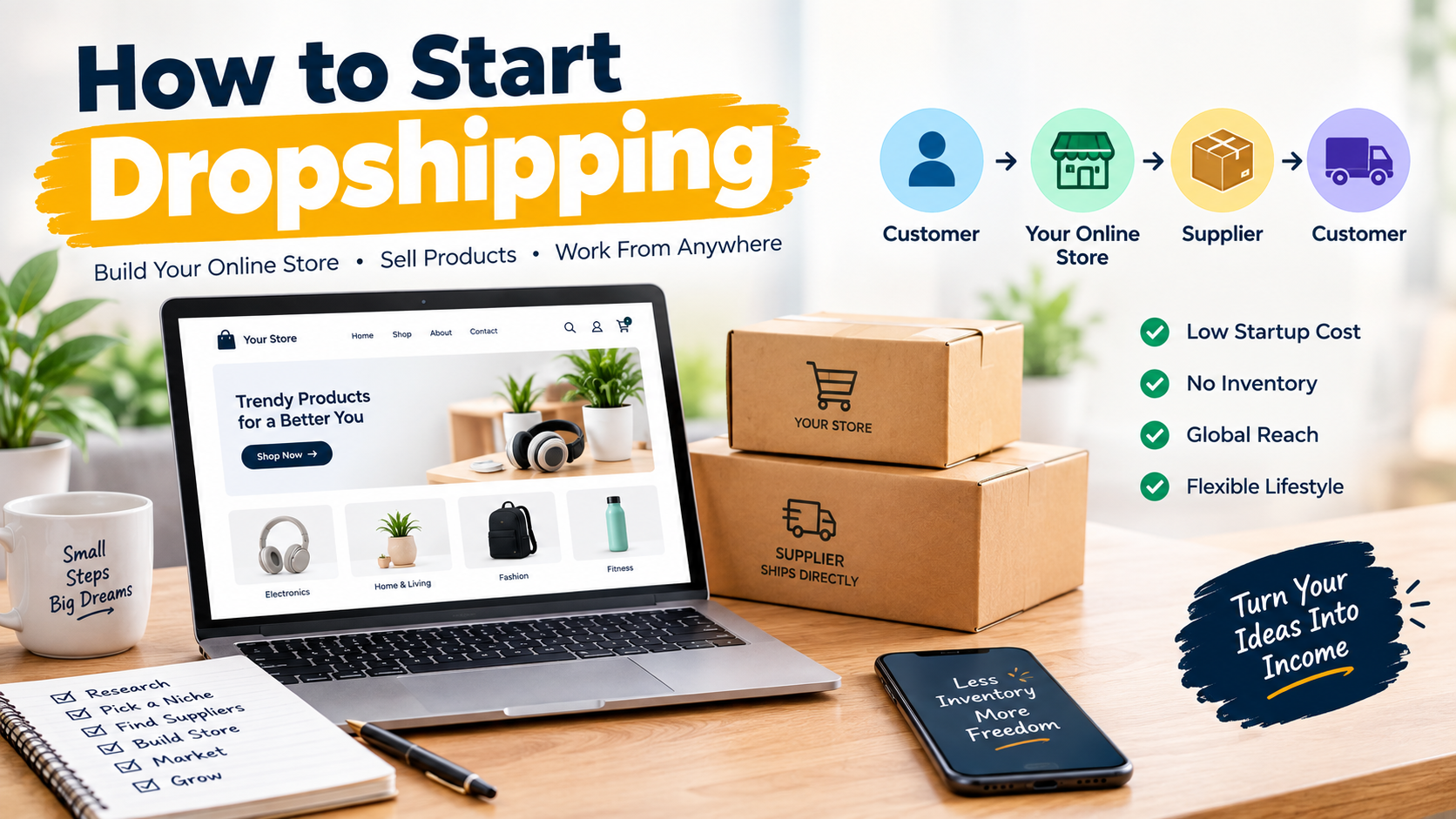
Dropshipping is an e-commerce business model where you sell products online without keeping the products in your own inventory. When a customer places an order, you purchase the product from a supplier, and the supplier ships it directly to the customer.
While dropshipping can have a relatively low barrier to entry, it still requires research, marketing, customer service, and careful financial planning. Here’s a step-by-step guide to help you understand how to get started.
What Is Dropshipping?
In a traditional e-commerce business, you typically purchase products, store them, and then ship them to customers.
With dropshipping, the process is different:
Customer → Your Online Store → Supplier → Customer
For example, imagine you create an online store selling desk accessories. A customer purchases a desk lamp from your store for ₹1,500. You then order that lamp from your supplier for ₹900, and the supplier ships it directly to your customer.
Your gross difference is ₹600 before considering expenses such as advertising, payment processing, taxes, refunds, and platform fees.
Step 1: Choose a Niche
The first step is deciding what type of products you want to sell.
Instead of creating a store that sells everything, consider focusing on a specific category or audience.
Some possible niches include:
- Home and organization
- Fitness accessories
- Pet products
- Travel accessories
- Hobby and craft products
- Desk and study accessories
- Kitchen organization
When choosing a niche, look for products that have a clear purpose and appeal to a specific audience.
Avoid choosing a product solely because it is currently trending. Trends can disappear quickly, leaving you with an expensive marketing problem.
Step 2: Research Your Products
Once you have chosen a niche, research individual products.
Ask yourself:
- Does the product solve a real problem?
- Who would buy it?
- How much are customers currently paying for similar products?
- Are there competing stores?
- Can the supplier deliver reliably?
- Is the product likely to arrive without damage?
- Are shipping times reasonable for your target customers?
You should also order samples when possible. Seeing the product yourself can help you evaluate its quality, packaging, and delivery experience before selling it to customers.
Step 3: Find a Reliable Supplier
Your supplier plays a major role in your business because they are responsible for fulfilling orders.
When evaluating suppliers, consider:
Product quality: Poor-quality products can result in refunds and unhappy customers.
Shipping: Check where products are shipped from and how long delivery typically takes.
Communication: A supplier who responds quickly can make it easier to solve problems.
Pricing: Your supplier’s price needs to leave enough room for your other business expenses.
Reviews and reputation: Look for consistent feedback rather than relying on a few reviews.
Don’t choose a supplier based solely on the lowest price. A slightly cheaper product isn’t necessarily a better business decision if fulfillment is unreliable.
Step 4: Create Your Online Store
Next, you’ll need somewhere customers can view your products and place orders.
You can build an online store using an e-commerce platform or create a website with e-commerce functionality.
Your store should include:
- A clear business name
- Professional product images
- Straightforward product descriptions
- Pricing information
- Shipping information
- Return and refund policies
- Contact information
- Secure checkout
Keep the design simple. Customers should be able to understand what you’re selling and how to purchase it without having to search through complicated menus.
Step 5: Set Your Prices
Pricing is more than simply adding a markup to the supplier’s price.
Consider your complete cost structure.
For example:
Selling price: ₹1,500
Product cost: ₹700
Shipping: ₹200
Payment/platform fees: ₹100
Marketing cost per sale: ₹300
That leaves approximately ₹200 before taxes and any other expenses.
This is why calculating your expected costs before launching a product is important.
A product can have a large markup and still produce a small profit if customer acquisition and operating costs are high.
Step 6: Build Your Product Pages
A good product page should answer the customer’s most important questions.
Include:
A Clear Product Title
Tell customers exactly what the product is.
High-Quality Images
Use clear images that show the product from different angles.
Useful Product Description
Explain what the product does, who it’s for, and its important features.
Honest Shipping Information
Don’t promise delivery in three days if your supplier normally takes two weeks.
Frequently Asked Questions
Answer common questions about size, materials, compatibility, shipping, returns, and other relevant details.
The goal isn’t simply to make the product look attractive. The goal is to give customers enough information to make an informed purchase.
Step 7: Set Up Payments and Business Basics
Before accepting orders, make sure you understand the legal and financial requirements that apply to you.
Depending on your country and business structure, you may need to consider:
- Business registration
- Tax requirements
- GST or sales tax
- Payment processing requirements
- Consumer protection rules
- Import and customs requirements
- Return and refund obligations
- Privacy requirements
If you’re starting in India, it’s particularly important to check the current GST, taxation, e-commerce, and import requirements that apply to your specific business.
A qualified accountant or business professional can help you determine what applies to your situation.
Step 8: Create a Marketing Strategy
Having a store doesn’t automatically bring customers.
You need a way to reach your target audience.
Some common marketing channels include:
Social Media
Create useful or entertaining content related to your niche. For example, a store selling desk accessories could publish desk-organization tips and product demonstrations.
Search Engines
Search engine optimization can help people discover your store when they’re looking for products or information related to your niche.
Paid Advertising
Advertising platforms can help you reach specific audiences, but advertising costs can add up quickly. Start with a clearly defined budget and track the results.
Content Marketing
Blog posts, guides, videos, and tutorials can attract people who are interested in your niche.
Focus on understanding your audience rather than simply posting advertisements repeatedly.
Step 9: Test Before Scaling
One of the biggest mistakes new entrepreneurs make is spending heavily before they know whether their business model works.
Instead, test your idea.
Start with a small number of products and monitor:
- Website visitors
- Product-page views
- Add-to-cart rate
- Checkout rate
- Conversion rate
- Advertising costs
- Refunds
- Customer feedback
- Profit per order
If something isn’t working, investigate why before increasing your spending.
For example, if lots of people visit your product page but very few purchase, the problem might be pricing, product-market fit, shipping information, trust, or the checkout process.
Step 10: Provide Excellent Customer Service
Even though the supplier handles fulfillment, you are still responsible for your customer’s experience.
Customers will contact you when:
- Their order is delayed
- A product arrives damaged
- They receive the wrong item
- They want a refund
- They have questions about a product
Respond clearly and professionally.
A good customer experience can help build trust and repeat business.
Common Dropshipping Mistakes to Avoid
Choosing Products Without Research
A product being popular on social media doesn’t guarantee that it will be profitable.
Ignoring Shipping Times
Long or unpredictable shipping can lead to complaints and refunds.
Using Poor Product Descriptions
Customers need accurate information before they buy.
Spending Too Much on Advertising
Don’t assume that increasing your advertising budget will automatically increase your profits.
Copying Competitors
Research competitors, but build your own brand and value proposition.
Forgetting About Expenses
Revenue isn’t the same as profit. Track all your costs.
How Much Money Do You Need to Start Dropshipping?
There isn’t one fixed amount.
Your starting costs can include:
- Domain name
- E-commerce platform
- Product samples
- Store design
- Marketing
- Payment processing
- Business registration
- Software or other tools
You can keep initial costs relatively low by starting small, but “low startup cost” doesn’t mean “guaranteed profit.”
The safest approach is to establish a budget that you can afford to lose and test your idea before committing significant money.
Is Dropshipping Worth It?
Dropshipping can be a useful way to learn about e-commerce because you don’t necessarily need to purchase large quantities of inventory upfront.
However, it isn’t a shortcut to easy money.
Successful stores still require:
- Product research
- Marketing
- Good suppliers
- Customer service
- Financial management
- Consistent testing
- Patience
Think of dropshipping as a business model rather than a get-rich-quick scheme.
Final Thoughts
Starting a dropshipping business involves much more than creating an online store and uploading products.
The basic process is:
Choose a niche → Research products → Find suppliers → Build your store → Set prices → Market your products → Test your results → Improve your business
Start small, keep track of your numbers, be honest with customers, and focus on building a business that provides genuine value.
With the right research and a willingness to learn, dropshipping can be a practical way to explore the world of e-commerce.
If you tell me your target audience (India/global), desired word count, and whether this is for SEO, I can also turn this into a more search-engine-optimized article with a meta title, meta description, keywords, FAQs, and a stronger introduction.